




July 1, 2020
What Would You Do?
What Would You Do?
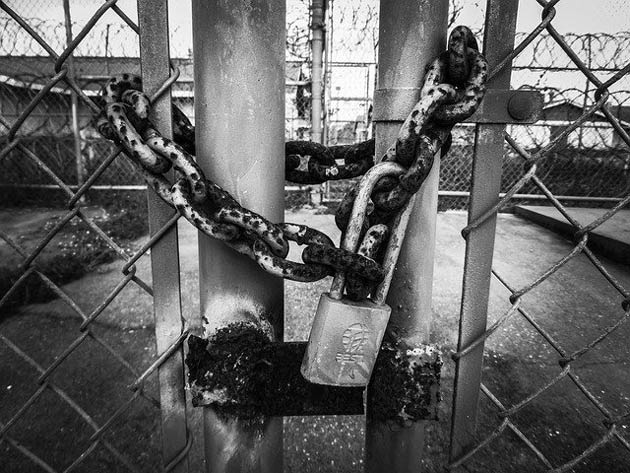
Picture yourself in jail, put away for a crime you didn’t commit. Your arrest and incarceration were a blur, and now you find yourself staring at graffitied walls and wondering how you got here. All your freedom has been stripped away. You get up when you are told, eat when you are told, go to bed when you are told. There are no windows in your cell, no possibility of fresh air. It’s hot. The air is musty. The stench of bodily odors is brutal. Every surface in your cell is hard, from the cement of the walls and floors to the steel of the sink/commode combo. Can you imagine your hopeless and helpless feeling thinking that, barring some miracle, this is now your life?
Now take it a step further. Rather than being imprisoned in a western nation, you have been captured by a terrorist organization. There is no bed in your dank, dirty cell. There is no sink/commode combo. It’s just you, four walls, and a gritty floor. But the situation is so much worse than that. There is no law that says your captors have to follow a certain set of rules. This is outlaw territory where everyone does as they see fit. The guards are cruel, and their supervisors are worse. You are regularly beaten and systematically tortured. The only thing worse than experiencing the violence against you is hearing it done to those who were taken with you—the people who were counting on you to protect them. What would you do? Would you simply endure it, praying that somebody was out there somewhere formulating some sort of rescue plan? Or would you try to escape, knowing that those you left behind would likely bear the burden of your flight?
As a writer of thrillers, part of what I do is to think through worst-case scenarios. What are the situations that get my heart pumping and my adrenaline going just thinking about them? This is the grist I use to form the plots of my novels. The goal of a good thriller is to take readers on an adventure they would never want to go on and ask them to consider, “What would I do in such a terrifying situation?” Most readers, of course, have no idea. They’re hoping the hero can figure it out. Which means I have to figure it out ahead of time, hook the reader in the opening pages and pull them deep behind enemy lines, wondering just how the hero will escape and whether he or she can possible rescue others in harm’s way. The more impossible the escape, the more exciting the story—so long as the hero’s escape plan shows how crafty and ingenious he or she is.

That last part is key. The solution must be logical and plausible, but not immediately obvious. If all of a sudden a guard forgets his gun in the holding cell or space aliens beam the captives up to their ship or an earthquake shakes down a building killing all the bad guys but somehow missing the protagonist, the reader will likely toss the book aside in disgust and say, “Never again.”
It was this process of “worst-case scenario” thinking and “logical and plausible” solutions that led me to the plotline of my next Marcus Ryker novel, The Beirut Protocol, due to be released spring 2021.
Ryker is leading an advance team along the Israeli-Lebanese border for an impending visit by the American secretary of state, when the team is ambushed and captured by Hezbollah forces. Before Ryker and his colleagues fully realize what is happening, they are dragged deep into Lebanon, well behind enemy lines. I don’t want to give too much away this early. But let’s just say that severely beaten and constantly surrounded by terrorists who are guarding them, Ryker and his team are in a pretty hopeless and dire situation. Does he wait and pray that someone comes to rescue them? Does he look for his opportunity to escape to go get help, knowing that it might dearly cost those he leaves behind? Does he search for a way for the whole team to escape, knowing that those even more terribly beaten and brutalized than him might not be able to run and thus might put the whole escape attempt at risk? It’s a situation Ryker has never faced before—and that made it all the more interesting and challenging to write.
I have finally finished the manuscript and turned it in to Tyndale during the first week of June. I wish it could release sooner, but I am excited for you to experience The Beirut Protocol when it comes out next year. It may be the most intense and fastest-paced novel in the series—and it’s evidence that this is not a trilogy. This is the fourth in the Marcus Ryker series and I’m hoping to write even more of them.
In fact, if you haven’t done so already, I hope you’ll use the summer to read my previous Ryker novels, The Kremlin Conspiracy, The Persian Gamble, and The Jerusalem Assassin. Those books will give Ryker’s backstory, show you what he’s capable of and what he fears. They may also give you a little glimpse at what other terrifying scenarios keep me lying awake at night with my heart quickly beating and my adrenaline pumping.
—Joel
