




February 15, 2019
The Pope and the Grand Imam
The Pope and the Grand Imam
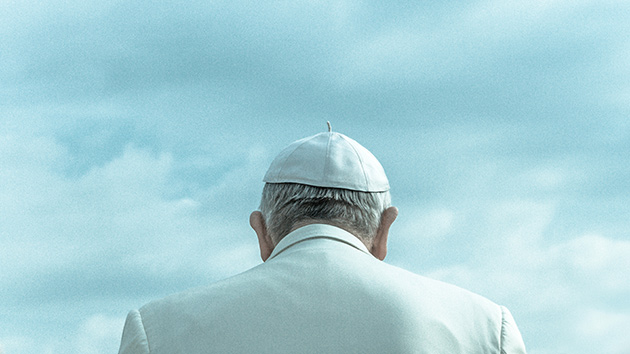
What began in 1960 with two missionary doctors became a Middle Eastern mass attended by 135,000 Muslims and Christians and officiated last week by Pope Francis himself. That husband–wife mission team surely could never have imagined the long-lasting impact that their sacrifice would make as they brought modern medicine to the Bedouins who lived in the area that would later become the United Arab Emirates.[1] Their sacrifice, says Yousef Al Otaiba, UAE ambassador to the United States in an article in Politico, forged a “legacy of respect and admiration between Christians and Muslims”[2] and eventually led to this historic papal visit, the first ever to the Arabian Peninsula.
It would be difficult to overstate the momentous nature of this papal visit to the Middle East. It is another huge step in the growing religious toleration that is spreading across the region. Great credit is due HRH Mohamed Bin Zayed, crown prince of UAE, for making this happen. In an area of the world that is known for its religious intolerance, the crown prince tweeted out these words: “We warmly welcome you Holy Father, Pope Francis and look forward to the historic Human Fraternity Meeting between you and His Eminence Dr Ahmad Al Tayyeb, Grand Imam of Al Azhar Al Sharif, in Abu Dhabi. We are hopeful that generations to come will prosper in peace and security.”[3]
When that meeting between the pope and the grand imam took place, Crown Prince Bin Zayed again tweeted, “The leadership & nation of the UAE are proud of this historic visit of two greatly respected religious figures. It embodies our belief in the values of love & tolerance as a pathway for humanity towards peace, security, stability, & rapprochement between different people & cultures.”[4] Those aren’t the kind of words that we in the West are used to reading from the Muslim world.
In 2016, ISIS promised to wipe out Christianity from the Middle East. In a recent op-ed in the Jerusalem Post, I spelled out the resulting bloodbath. “The number of Christians in Iraq plunged from about 1.5 million to between 200,000 and 300,000 today. Many were killed. Most fled the country. In Syria, the number of Christians has plummeted from 1.25 million to about 500,000 today.”[5] This kind of religious expungement is what comes to most people’s minds when they think of Christianity in Muslim states. But something new is happening. We’ve seen it in Jordan. We’ve seen it in Egypt. We’ve seen it in Saudi Arabia and Oman and Bahrain. There is a softening of hardline ideologies and a growing desire to become part of the greater world community.
Sheikh Mohammed bin Rashid Al Maktoum, UAE prime minister and vice president, affirmed this attitude when he said, “We have learned from hundreds of thousands of dead and millions of refugees in our region that sectarian, ideological, cultural, and religious bigotry only fuel the fires of rage. We cannot and will not allow this in our country. We need to study, teach, and practice tolerance and instill it in our children, both through education and our own example.”[6] It is this commitment that led to the papal invite as the UAE inaugurated its Year of Tolerance.

Of course, we can’t get too far ahead of ourselves. “I don’t believe what we have here is religious freedom; it’s religious tolerance,” says Jim Burgess, pastor of Fellowship Church and member of the Gulf Churches Fellowship.[7] But even tolerance is a step in the right direction toward freedom in the Middle East. My prayer is that we keep seeing these hopeful signs as more and more countries welcome different faiths.
In a recent Flash Traffic post, I summed it up this way: Do significant theological differences remain between Muslims and Christians, as well as between Catholics and Evangelicals? To be sure. My goal is not to blur those differences nor suggest they are not important. They are very important. Rather, my goal it is to see if people of different faiths who have deep disagreements over central theological matters (as well as social, cultural, and political ones) can love and respect one another and encourage peace, rather than the genocidal violence the region has known far too long. To this end, I’m glad to say I am seeing some hopeful signs of progress.
[1] Otaiba, Yousef Al. “Why We Invited the Pope to the Arabian Peninsula.” Politico, 2 Feb. 2019, www.politico.com/magazine/story/2019/02/02/pope-francis-visits-arabian-peninsula-224545.
[2] Ibid.
[3] زايد محمد بن. Twitter, 31 Jan. 2019, twitter.com/mohamedbinzayed/status/1090876744821805057?s=21.
[4] زايد محمد بن. Twitter, Twitter, 3 Feb. 2019, twitter.com/mohamedbinzayed/status/1092134922662354945?s=21.
[5] Rosenberg, Joel C. “Encouraging New Season for Christians in Mideast.” The Jerusalem Post, 21 Jan. 2019, www.jpost.com/Opinion/Encouraging-new-season-for-Christians-in-Mideast-578109.
[6] Moore, Rev. Johnnie. “The Significance of Pope Francis’ UAE Visit Is Impossible to Exaggerate (Nobel Committee, Take Note).” FOX News Network, 4 Feb. 2019, www.foxnews.com/opinion/the-significance-of-pope-francis-uae-visit-is-impossible-to-exaggerate-nobel-committee-take-note.
[7] Casper, Jayson. “Francis of Arabia: Will UAE’s Warm Welcome Help Christians Feel More at Home?” Christian History, Christianity Today, 8 Feb. 2019, www.christianitytoday.com/news/2019/february/pope-francis-united-arab-emirates-uae-christians-arabia.html.
