February 5, 2025
Q&A with Janette Oke, Author of The Pharisee’s Wife
Q&A with Janette Oke, Author of The Pharisee’s Wife

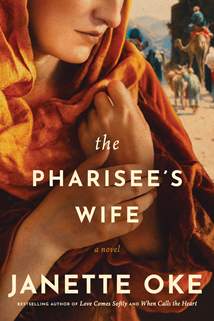
Beloved author Janette Oke has captivated readers for decades with her heartfelt stories of faith, perseverance, and love. Best known for Love Comes Softly and the Canadian West series, she has played a pivotal role in shaping the genre of inspirational fiction. Now, at a time when she thought her writing career was behind her, Oke is returning with a new novel, The Pharisee’s Wife, releasing March 2025. In this exclusive interview, she shares what inspired her to write again, the powerful themes behind her latest story, and her reflections on faith, history, and storytelling.
What were the driving factors that led you to write your first book, Love Comes Softly, and did you have any idea that it would be the start of a such a long and prolific writing career?
I have always been interested in stories, though I don’t remember feeling a “calling” to write books in my early years. As a young child, I made up oral stories before I knew how to write. When I was eight, my mother was taken to the hospital. We were all scared—it was over Christmas—and I wrote a simple little poem that was shared with her when she finally came home. For the next while, anyone who came to our house had to suffer through that poem. I was embarrassed—but also a little proud. Something I had written had touched another’s heart. I didn’t understand it, but somehow there was power in the written word.
I was a reader throughout my childhood and teen years (as were my mother, father, and schoolteacher, who all read us books) so I had a wide range of favorites, from classics to westerns. In my mid-teens I developed an interest in stories about the opening of the ‘west.’ The pioneer life fascinated me. I lived in an area of Alberta where original settlers were our neighbors. Our western province was very newly settled. The First Nations people had been here for many years.
In my late teens I attended and graduated from a small bible college and after graduation married Edward Oke. After further studies he became a pastor and we were very busy with the church and a family of four.
As a young mother I still found time to read—but the options were few. There was really nothing being published by the faith community to supply the type of story I wished to read. More than one of my secular book purchases went into the trash, unfinished. I felt there must be other readers who wished for books with a good story which would also encourage them in their faith. So at the age of 42, with four teenagers, I felt lead to write my first novel—in long-hand—at my dining room table. It was a very simple story, sharing loss, grief, and pain, but also healing and renewal. Oh, yes, and love! At the time I did not think beyond that first book.
I wasn’t the only one who took a leap of faith when writing Love Comes Softly. After wrestling with the idea of putting money and time—and prayer—into publishing something so experimental, Gary and Carol Johnson of Bethany House took a risk as well. It was discovered that there were readers out there interested in a simple story of faith and love. Readers asked for more, and one by one I continued to write. Writing quickly took on new meaning for me. It was rewarding to be able to share my faith by way of stories, especially when the books began to travel to other countries. Writing soon became my ‘mission’ opportunity.
You have “come out of retirement” several times to co-write series’ with Davis Bunn and your daughter, Laurel Oke Logan. The most recent of those projects (with your daughter Laurel) concluded in 2022, at which time you again thought you were done writing novels. So, how did this new story, The Pharisee’s Wife, come about?
With all of those projects completed, I again felt that I was ‘done’ and did not allow my mind to go searching for exciting new projects. There were a few ideas I played with for awhile, but I did not feel the need, or the urge, to develop them.
It was a surprise to me when recently I had the sense that God was calling me to write a new book. I felt that the message he was asking me to share was, “God kept his first promise of sending his Son as a baby in the manger—even though the world had needed to wait for many years—and he will keep his promise of Christ’s second appearance—his return—even though the world has waited again for thousands of years. God will fulfil his plan. Jesus will return! Be ready!” I felt strongly that to refuse to write the book would be disobedient on my part. But books do not just happen. I needed characters, plot—all of the components that make a story. God had given the message he wished to relay but putting it all together was my job. I had just read through Revelation and followed it by reading the Gospels, but this time I had noted some things in a new way. I saw the parallels between Christ’s first coming as a babe in the manger and the yet unfulfilled promises of his second coming—his future return.
The time Christ shared with mankind was a most complex time. His coming made it even more so. Never were there so many ‘layers’ in society. Never had the difference between what was right and wrong in the religious community been so complex. How did one sort through all the different viewpoints? From the faithful and dedicated intense Jew, to the many factions that offered their own interpretation of the ancient Scriptures—it was all so confusing. And the words from the lips of this new ‘rabbi’ made it even more so. The huge and complex leap from the deeply entrenched Jewish faith, with all of its fixed rules and regulations, to a simple faith and a trust in the words of one magnetic and powerful—though to many questionable—man who claimed to be one with God was mind-blowing. It meant that everything was to change.
And there were so many layers in society itself. Faithful Jewish priests, intent on keeping the Law. Pharisees. Sadducees. Foreigners from many countries mixing in parts of their own worship of their false gods. The extremely wealthy and the desperately poor; the masters and the slaves. And the ever-present Romans, foreign and controlling, always watching, always demanding. For the small, enslaved country of Israel, things no longer seemed simple or secure, even for the very elect. How did one hold on to the past yet move on to the unknown future?
What inspired you to create the two main characters?
I wished to expose the underlying conflict of that time, so I chose an extremely strict and arrogant young Pharisee, dominated by thoughts of power and prominence, and a beautiful but poor girl from a simple Jewish home where the long-standing Law had been taught and obeyed. She had no say in the matter. The Pharisee’s position of power would override any protest. They were not a good match if one was hoping for a heart-warming love story.
How did you decide which individual characters would be receptive to the deity of Jesus versus those who rejected his message or were slower to come to faith? Do you think readers will see similarities between how people responded to the gospel in those days and how they respond now?
Again, I wished to show the complexity of life at the time. There needed to be a mix of the different layers. A need for surprise or question. Who would receive and who would reject the young Galilean with his strange message but great healing power? Sometimes individuals came one at a time, at other times little groups came together. And then there were the crowds who were a mix of many layers. Curiosity may have brought them, but they often left with a changed heart. Jesus’ greatest and most productive ministry seemed to be with the crowds. But it always took an individual decision.
We never actually meet Jesus in the novel, but we hear much about him from the masses that follow him from town to town. It is from individuals within these crowds that we hear about him. Some of the stories were confusing. Seemingly unbelievable. What would he need to do to convince the crowds that he was who he claimed to be? Certainly, the miracles got lots of attention. But there had been miracle-workers in past generations. They had all passed away. Ordinary men. This man, if one listened to him closely, claimed to be eternal. How could one accept that? It was no wonder the bulk of the masses found him hard to believe. Yet there was something about him that made one wonder. Could it really be so? Could this be the one God had promised to send?
Our world holds somewhat the same mix today. Those who believe, who are still waiting for the return of Christ, cling to that truth. We see our world and the events of the day in a different way than those who have not believed. Even though we may be openly scorned by many, we feel support and understanding from those who have believed. We tend to seek them out—to gather with those of like faith. To take strength and hope from one another.
Yet there are many who share our daily lives who cannot accept the Truth. Even when they have been raised among believers, many times in the same household, raised by the same parents, having been schooled in the same truths, they still do not embrace the Faith. They cannot see, do not understand, or accept, the message of Truth. Some, especially in parts of our world, openly oppose those who claim Christ as the coming Savor. And surprisingly, at the same time, there are those who have had little exposure to Truth, who do reach out to receive it gladly, claiming it as their own. Faith today is a personal choice, just as it was in Jesus’ day.
Was there a message or lesson you wanted to convey to readers by writing “good” or “nice” characters who did not accept Jesus, while other, less likeable characters did?
Yes, it was intentional. God has given freedom of choice. One individual will be so ‘close’ and so ‘good’ yet still resist taking that final step of faith, and another we might feel is so evil and harsh and undeserving will gratefully accept forgiveness. Sometimes it doesn’t seem right or even fair. “She has done so many worthy things. Isn’t that enough?” Or “Did you see what he did? How can such a terrible sin be forgiven?” We know how we would judge.
God forgives when one confesses and repents. Yet we do not know what goes on in another’s heart and mind. Only God has the knowledge, the right, to be the judge. He judges with justice.
We have heard the words, “As one dies—so he will remain.” We believe that Scripture teaches that after death, there is no second chance. Still we often cling to the possibility that before death, an unshared, unknown, private decision has been made—so we hope, thinking, “What if light has come, repentance has occurred, forgiveness was sought, and God’s grace given?” We do not know. One thing we do know: God is loving. If there is any reason for mercy, it will be given. But he is also righteous—and just.
How did you decide which historical events to include in this story?
There was not the option of going on and on with the complexity of history for the many years since Christ’s death and resurrection which would have been far too weighty, but I wished to remind readers that much happened over the years that was ugly and dark. There have been very few times in history when there was not war, famine or plagues, somewhere, which suggested to some that God had forgotten his people. Or that Christ had been a hoax. Yet, still we wait. Believers cling to the fact that God keeps his promises. And because he has promised redemption, that should encourage us to be ready. It will happen.
In Chapter 28, after the Pharisees have arranged Jesus’ crucifixion, there is a powerful scene between a scribe and a scholar who is poring back over the prophesies about the Messiah when a feeling of dread comes over him. What do you hope this scene will communicate to readers?
I did not want to leave the impression that the line between those who believe and those who do not was definite and ‘controlled’ by God, with no option or possibility for anyone whose name was not on a “list.” No, the people of that day had individual choice. Not all the scribes or Pharisees or any other group rejected Christ because that was their destiny. Scripture tells us that there were those who went against the crowd and dared to accept Christ, taking a bold stand against their peers. Nor did all who had been schooled in the Old Testament scriptures and had been waiting through the years for this very event, accept him. All have been given freedom to accept or reject Jesus for who he claims to be.
How did you do research for this story?
I relied on the Gospel accounts. Since each Gospel writer presents the story in a little different way it was sometimes tricky to sort out the definite order of events. I had a number of pages of crisscross notes where I felt it was important to keep things accurate and in the proper order. There were times in the story where I needed fill-in material that was not important to our faith position, where I fleshed things out for the sake of interest or understanding.
What do you hope readers will take away from this story?
I have tried to remind readers that God has given, both in the Old and New testaments, the clear message that he has a plan, and it will be fulfilled according to his timing. Our world is not controlled by random happenstance. We need to be ready.
Do you have any final thoughts you’d like to share?
We all have a part to play, not just in our work but in our daily lives, in sharing with our world the Good News of the Gospel. Whether earth’s time is short, as many believe, or stretched out generously before us, time is short for some of those around us. We never know the minute someone in our life may be taken from us. May we be open to God’s directive in every area of our daily life. May we share his love as we have opportunity.
Books are one very effective way to share our faith. From the letters, emails, and phone calls I have received over the years, I have been deeply impressed with the power of the printed page. I have dubbed my books “paper missionaries” because they go to places I will never go and speak to people I will never meet, and the response to the message has been surprising and uplifting. Some countries, closed to faith-content in the past, are now opening to allow books from Christian countries to enter. We have a great opportunity as publishers and writers to present Faith to our world, and stories can sometimes be accepted when and where the Bible is not.
Even so, we know that lives are not changed by reading a book. Lives are changed when the Spirit of God is allowed to minister to a needy but open heart. Sending forth books must be accompanied by prayer that whatever the situation of the reader, God’s Spirit be allowed to speak. That is why we write. That is why we print, and sell, and send, and promote. God can, and often does, speak through a simple story. May we use this opportunity to the best of our ability.
Buy your copy of Oke’s new book, The Pharisee’s Wife today.