




How Do Publishers Afford to Take Risks on New Authors?
How Do Publishers Afford to Take Risks on New Authors?
The Writer’s Corner: The Craft of Writing Political Thrillers
Publishing has entered a radical new era.
The advent of e-books has brought the price of purchasing a good story down to a bare minimum, while the cost of publishing that story in an electronic format is near zero (not counting any of the publisher’s overhead costs, author royalties, and marketing costs).
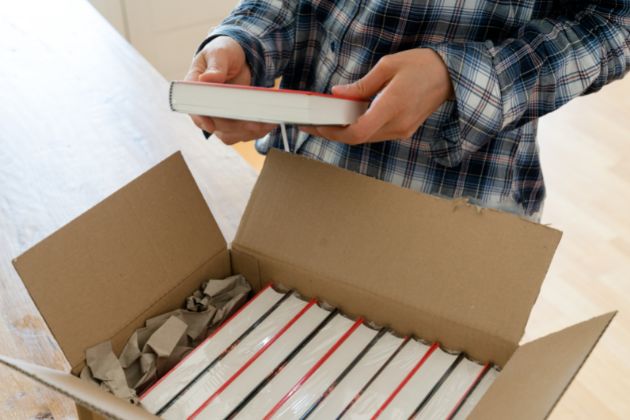
This has led to some people wondering if there is still a place for hardcover books in the industry. Has the premium the consumer must pay for a solid, dust-jacketed tome made it a publishing dinosaur?
Judging by the fact that 30 percent of print book sales in 2022 were hardcover,[1] the answer is an emphatic “Absolutely not.” Readers continue to view paying a higher price for an attractive, well-crafted hardcover book well worth it if they trust the author to give them a great story.
Thus, bestselling hardcover authors are highly valued by their publishers. Even after a certain percentage of the list price is designated for the bookstore or online retailer, there is still a significant profit.
And what do the smart publishing houses do with this cash? They use it to take risks on new authors. Without the hardcover dollars coming in, author acquisition decision makers would be forced to be far more conservative in finding new blood and future bestselling writers.
So if hardcover editions are more financially lucrative than e-books, why don’t publishers just print every book in that format and abandon e-books (and paperback editions)? About twenty years ago, I read a great book on marketing called Unleashing the Ideavirus. It was written by Seth Godin, an entrepreneur and the former vice president of direct marketing for Yahoo. I found his argument intriguing. He argued that it’s actually a major mistake for publishers to release new authors in hardcover. Why? Because of the risk factor. You want consumers to be willing to take a chance with an author that they’ve never read or heard of. For many, hardcover prices are too significant a barrier to take that kind of chance on an unknown commodity. By releasing works by new authors in paperback or e-book editions, it’s much more likely that they will be read and gain a growing audience. Only after an author becomes truly successfully, Godin argued, should publishers roll out their next editions in hardcover.

That makes sense. When I was younger, I can remember going to Eastview Mall in Victor, New York, not far from where I grew up in a little town of five thousand people called Fairport. Around Christmastime, whenever I would pass a Hickory Farms, someone would be standing there with a sampler plate of various cheeses and sausages. Passersby would say, “Hey, look at that! It’s free! Let’s try it.” If they liked it, many would walk in and make a purchase. Hickory Farms may still do that today. Living in Israel, I have no idea and it’s been a long time since I’ve been in an American mall around Christmas. The point is that a softcover or e-book price lowers the financial bar, allowing the consumer to take a taste. If the story excites them and the characters draw them in, they might be ready to pay the price for a hardcover when the author releases their next book.
This is the publishing circle of life. Established authors write big bestsellers. Their publishers release them in hardcover. Readers buy them in hardcover because they’re already “hooked,” as it were. The publisher then uses the additional revenue to take a chance on a new author. They release the early books by the new author for as low a price as possible. It doesn’t make the publisher or author a lot of money. But it lowers the risk and provides time to find and build a large enough fan base to justify releasing their next book in hardcover. And then the cycle can begin afresh, allowing new and undiscovered talent to be nurtured and developed.
That’s how I got started in this business—and I’m excited about a system that allows publishers to let other authors begin pursuing their dreams as well.
—Joel C. Rosenberg
[1] Jim Milliot, “Print Book Sales Fell 6.5% in 2022,” Publishers Weekly, January 6, 2023, https://www.publishersweekly.com/pw/by-topic/industry-news/financial-reporting/article/91245-print-book-sales-fell-6-5-in-2022.html
