




March 3, 2026
Foundation Focus: Engaging, Equipping, and Empowering Local Leaders Around Europe
Foundation Focus: Engaging, Equipping, and Empowering Local Leaders Around Europe
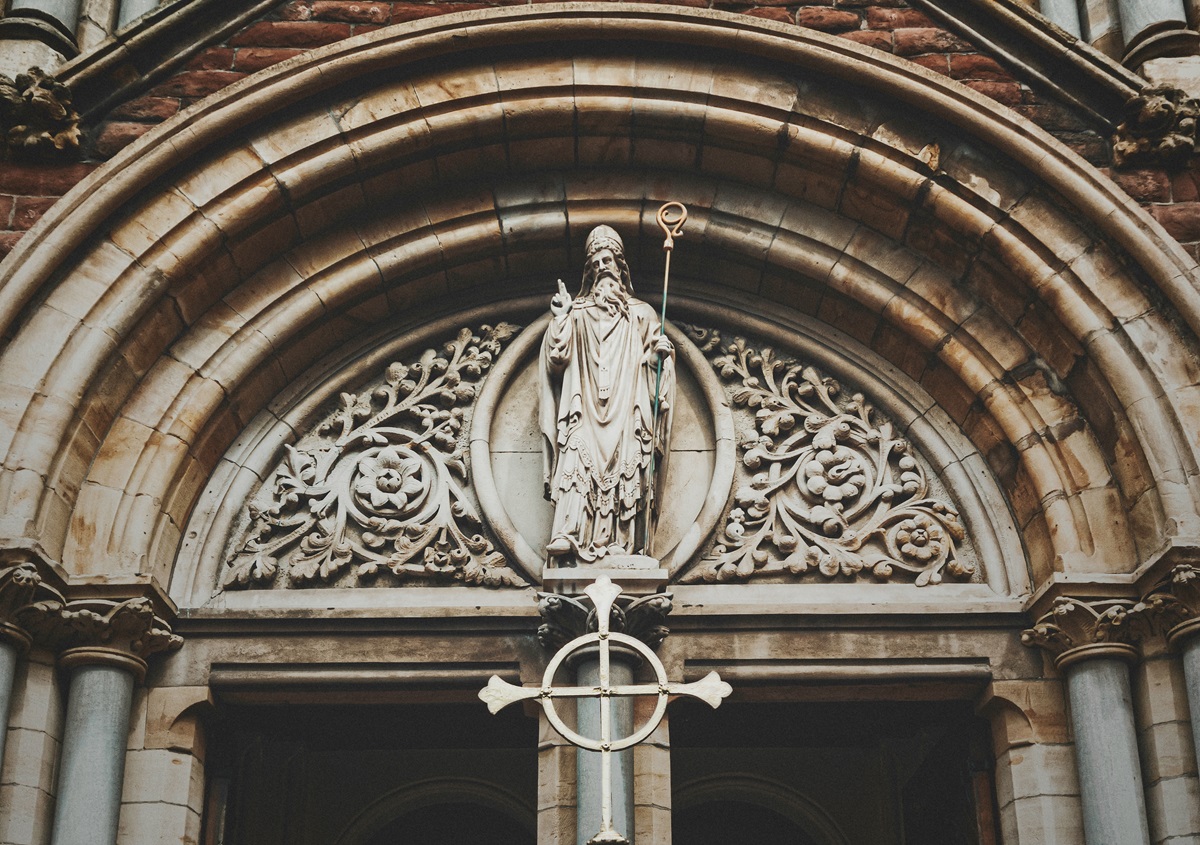
When people today think of St. Patrick’s Day, they often picture shamrocks, pots of gold at the end of rainbows, and a sea of green. But who really was Saint Patrick, and what did he do that made him significant enough to have his own holiday?
Saint Patrick is largely credited with the spread of Christianity throughout Ireland in the early 400s AD and is recognized today as Ireland’s patron saint. Born as Maewyn Succat in what was likely present-day England, at age 16 he was kidnapped, taken to Ireland, and enslaved. He spent years in captivity working as a herdsman, or shepherd. Maewyn’s faith would deepen dramatically during this time, and after dreaming of the ship by which he would escape, he ran from captivity and returned home after six long years. Maewyn, eventually taking the name of Patrick, would later return to Ireland as a missionary, preaching the gospel to the very people who had enslaved him years before. It’s largely believed that he died on March 17, AD 461, which is now observed as St. Patrick’s Day in remembrance of his commitment to sharing the gospel and establishing churches in Ireland.
Because of Saint Patrick’s faithful witness, many people in Ireland moved from pagan practices associated with the Celtic tradition to the path of freedom in Christ. Today, over 1,500 years later, the Christianity that Patrick brought to the Irish has waned as secularism became more culturally dominant. And this isn’t just the case in Ireland; Europe, once an epicenter for the Christian faith, has seen a stark decline in professing Christians as it becomes increasingly secular and post-modern.
It’s common today to talk about Europe as being “post-Christian.” Throughout the 20th and 21st centuries, Christianity has grown and flourished in regions of the Global South like Africa, Latin America, and Asia, while church attendance and engagement have shrunk in Europe. Broadly speaking, between 2010 and 2020, the proportion of Europeans who identify as Christians has fallen from 74% to 67%.[i] France and the UK are no longer majority Christian countries, and “religious disaffiliation” is the primary driver of this change, meaning that people raised in Christian homes are now choosing not to be affiliated with a religion.[ii]
The churches, crosses, and cathedrals scattered throughout European cities and countrysides no longer represent a dominant cultural influence; now, they represent Europe’s historical past. As societies and cultures have become more influenced by secular frameworks, morality has become more defined by personal experience than biblical truth, and within European society, faith is often seen as irrelevant, outdated, and untrustworthy.[iii] The continent that was for 1,500 years the geographic center of Christianity is now in desperate need of revival. What was once the hub for sending evangelists and missionaries around the world now needs to be re-evangelized.
At Tyndale House Foundation, we know that, in the same way that God called Patrick to take the good news to the people of Ireland, God is still calling faithful believers in and to Europe to grow his church and to make his name known. THF has ministry partners throughout Europe through a wide range of ministry focuses, including church planting in the UK, youth discipleship in France, Christian publishing in Ukraine, student leadership development in Spain and Germany, or so much more!
_______
What was once the hub for sending evangelists and missionaries around the world now needs to be re-evangelized.
_______
The decline of the prevalence of faith in Europe is a critical issue that should be addressed, and we are deeply encouraged to hear from our partners how God is calling, equipping, and leading ministries as they seek to proclaim the gospel throughout Europe.
This March, we invite you to pray with us for the unique spiritual needs present in Europe, and for those working to meet these needs through Christian literature, discipleship, education, training, and compassion projects.
- Pray for a revival of faith across Europe and that God would continue to move across the UK specifically, where church attendance among the younger generation is growing.
- Pray that people from all generations would be open to engaging with content and discussions about Jesus.
- Pray for diaspora populations in Europe from nations hostile to the gospel, that new doors would be opened for God’s truth to be revealed to them.
- Pray that the church in Europe would be an example of unity and compassion in a cultural moment that has become increasingly polarized.
- Pray that hearts would be softened and that Jesus would break through secular mindsets and feelings of bitterness to become real to people.
As we continue to partner with and pray that every country and context would experience true Gospel impact, we stand assured in the truth that God has done it before and that he’s faithful to his promise to see it through.
[i] “Religious Practice Is Declining in Europe, Pew Research Centre Says.” Euronews. January 21, 2026. Accessed February 27, 2026. https://www.euronews.com/2026/01/21/religious-practice-is-declining-in-europe-pew-research-centre-data-shows.
[ii] Hackett, Conrad, Marcin Stonawski, Yunping Tong, Stephanie Kramer, Anne Shit, and Dalia Fahmy. “How the Religious Landscape Changed from 2010 to 2020: Religion in Europe.” Pew Research Center. June 9, 2025. Accessed February 27, 2026. https://www.pewresearch.org/religion/2025/06/09/religion-in-europe/.
[iii] “Global Voices Report – October 2025.” Lausanne Movement. Accessed February 27, 2026. https://lausanne.org/research/global-voices/october-2025.
