




January 28, 2020
Auschwitz Memories
Auschwitz Memories
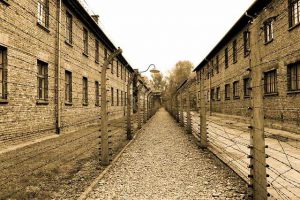
On January 27, 1945, Soviet troops entered the Auschwitz death camp and found thousands of people dead and dying. What they couldn’t see were the more than one million Jews and others who had been systematically slaughtered and their bodies burned. This past January 27, world leaders gathered in both Jerusalem and at the site of this genocide in southern Poland. Tours were given, speeches were made, and promises of “never again” were voiced. Luminaries such as U.S. Vice President Mike Pence, French president Emmanuel Macron, Britain’s Prince Charles, and Russian president Vladimir Putin all came to pay their respects.[1] One significant visitor to the Auschwitz site in Poland was Sheikh Mohammed al-Issa, a Saudi who is the head of the Muslim World League, an international nongovernmental Islamic organization.[2] I have met him in the past and I believe that he is a man who desires respectful interfaith relations. His attendance spoke volumes about the growing moderation of much of Islam.
The millions of victims and the thousands of survivors were respectfully remembered at the ceremonies, and it was a blessing to see the outpouring of love from the international community. However, as I read the many tributes, I realized that there were a handful of stories being overlooked. These were the tales of that small number of prisoners who managed to escape the Nazi death camps. It is worth remembering the risks they took, because it is due to the sacrifice of some of them that word of what was taking place within the Nazi’s Final Solution began to spread around the world.
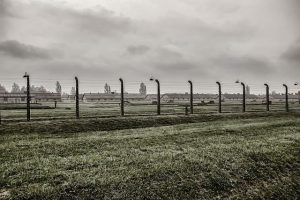
On April 7, 1944, two Slovak Jews, Rudolf Vrba, nineteen, and Fred Wetzler, twenty-five, hid for eighty hours in a woodpile, having gagged their own mouths with cloth to prevent any accidental coughing, while the Auschwitz guards searched for them. Once their path appeared to be clear, they slipped through the fences and made their escape. A month and a half later, on May 27, 1944, Czesław Mordowicz, twenty-three, and Arnost Rosin, thirty, were working hard labor in a gravel pit. There they found a short, narrow bay in the pit. With patience and planning, they prepared their escape. Finally the day came when they slipped into the small space and covered themselves with rocks. After three days of waiting, the search for them died down and they fled across the fields to freedom.
The significance of these escapees goes far beyond their personal stories. By prearranged plan, these men rendezvoused in Czechoslovakia. There, they wrote a firsthand report of the horrors of the death camps—torture and starvation and mass murder. This report came to be known as “The Auschwitz Protocol,” and it was translated, smuggled out, and spread throughout Europe. Tragically, it took way too long for the report to receive the necessary attention to cause much action. When the press got hold of it, the report sparked international outrage. Sadly, it wasn’t enough to move either the U.S. or Britain to liberate the camps or to at least bomb the train lines leading to the camps. Still, the warnings of these four men written out in “The Auschwitz Protocol” are credited with saving 120,000 Jews in Hungary.
I was so inspired by these men when I heard their stories that I resolved to tell the world about them. People need to know about these hidden heroes. Their sacrifice must be remembered. With the assistance of one of the foremost Holocaust scholars at Yad Vashem, Israel’s Holocaust museum, I wrote The Auschwitz Escape, a novel inspired by their heroics. While the story is fiction, the dangers these men faced are faithfully memorialized. Jesus told his disciples the day before he sacrificed himself on the cross that “Greater love has no one than this, that one lay down his life for his friends” (John 15:13). Vrba, Wetzler, Mordowicz, and Rosin were willing to lay down their lives not just for their friends, but for hundreds of thousands of complete strangers. The memory of them must not be forgotten.
—Joel
[1] Raphael Ahren, “Everything You Must Know about the Biggest Diplomatic Event in Israel’s History,” The Times of Israel, January 22, 2020, www.timesofisrael.com/everything-you-must-know-about-the-biggest-diplomatic-event-in-israels-history/.
[2] Jack Khoury, “Senior Saudi Religious Leader Visits Auschwitz on 75th Anniversary of Liberation,” Haaretz.com, January 23, 2020, www.haaretz.com/middle-east-news/.premium-senior-saudi-religious-official-visits-auschwitz-on-75th-anniversary-of-liberation-1.8438885.
